
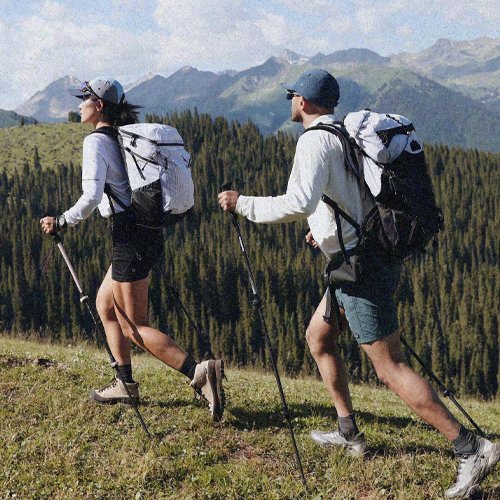
Whether you are a brand owner, retailer, B2B buyer, or individual customer, knowing how to choose a hiking backpack is extremely important. A high-quality and comfortable hiking pack can help prevent shoulder pressure, back heat buildup, and unstable load balance, improving the overall hiking experience for the end user. For brands and retailers, choosing the right hiking backpack also helps attract and retain customers while strengthening brand influence.
However, in real product development, many custom hiking backpacks fail to sell because the capacity is too small. Others face returns because the backpack does not fit the back properly or the carrying weight feels unstable. So, with so many hiking packs, trekking backpacks, and adventure backpacks on the market, how can buyers make the right choice?
Our sales manager Lucy has 10 years of experience in custom bag development. Based on more than 690 custom hiking backpack projects she has managed, she summarized the following six points of hiking backpack buying guide.
Choose Capacity Based on the Actual Hiking Style
The capacity of a hiking backpack should be selected according to the actual hiking style.
Trail running and lightweight hiking vests usually range from 6L to 20L. They are lightweight and easy to carry, and often feature chest pockets for quick hydration and energy replenishment.
A 15L to 30L day hiking backpack can hold essentials for a half-day to full-day hike, including food, clothing, water, and emergency items.
A 35L to 50L multi-day backpack can carry more gear, such as a tent, sleeping pad, several days of food, water, and clothing. It is more suitable for 2–4 day hiking trips and outdoor adventures.
A 60L to 120L hiking travel backpack is suitable for trips longer than one week or for family outdoor use.
| Hiking Type | Recommended Capacity | Suitable For |
|---|---|---|
| Trail Running / Fast Hiking | 6L–15L | Water, energy supplies, phone, lightweight jacket |
| Short Day Hikes | 15L–20L | Half-day hiking, city-to-trail use |
| Full-Day Hiking | 20L–30L | Food, water, spare clothing, rain gear, first aid kit |
| Lightweight Overnight Trips | 35L–50L | Basic camping gear and lightweight sleeping system |
| Multi-Day Hiking / Long-Distance Trekking | 60L–90L+ | Tent, sleeping bag, food, clothing, and professional gear |
| Multi-Week Expeditions / Family Travel | Over 100L | Tent, cookware, food, sleeping bags, clothing, and professional gear |
It is important to choose the right capacity based on your target customer group. A backpack that is too small cannot meet storage needs, while an oversized backpack, once fully packed, can increase the carrying burden, shift the center of gravity, cause instability, and reduce comfort. Ideally, the total carrying weight should not exceed 20%–30% of the user’s body weight.
Fit and Carrying Comfort
How well a backpack fits the body is an essential factor when choosing a hiking backpack. When selecting a hiking pack, pay attention to torso size, hip belt position, and suspension system design.
Torso size: Women’s backpacks usually have a shorter torso, narrower shoulder straps, and a hip belt that is narrower at the top and wider at the bottom, making it better suited to body curves. Men’s backpacks usually have a longer torso, wider shoulder straps, and a wider, thicker hip belt for stronger support.
Hip belt: Whether it is a men’s or women’s hiking backpack, the hip belt should sit closely above the iliac crest for better carrying comfort. This design transfers 70% to 80% of the total carrying weight to the hips, reducing pressure on the back and shoulders.
Suspension system: A frameless structure is lightweight but offers limited support. A framed backpack or a backpack with a support system helps transfer weight more effectively, but it also adds weight. A suspended mesh back system is lightweight and breathable, but the backpack’s center of gravity may shift slightly away from the body.
| Suspension Type | Advantages | Suitable For |
|---|---|---|
| Internal Frame | Stable load carrying and effective weight transfer | Multi-day hiking and heavy-load trekking |
| Back Panel + Support Stays | Moderate structure and balanced weight | Day hiking and lightweight overnight trips |
| Frameless Design | Lightweight, soft, and flexible | Ultralight hiking and fast hiking |
| Suspended Mesh Back System | Better ventilation and less back heat buildup | Hot and humid environments |
The suspension system determines how the backpack carries weight, how it fits the body, and how stable it feels during movement. In addition, the back panel, shoulder straps, and hip belt of a hiking backpack should be filled with thick and soft padding to further improve comfort.
Weight
Weight has a major impact on carrying comfort. Even if a backpack is equipped with load adjustment straps and a thick hip belt, it can still feel uncomfortable if the total load is too heavy.
For easier comparison, most manufacturers conduct load-bearing tests and provide load ratings to buyers. For example, Kewei has tested several hiking backpacks developed in-house, with load ratings as follows:
| Backpack Type | Load Rating |
|---|---|
| 22L Internal Frame Backpack | 30–40 lbs |
| 30L Frameless Backpack | 20–24 lbs |
| 55L Heavy-Duty Hiking Backpack | 50–60 lbs |
All of these backpacks meet the general load-bearing requirements of the current hiking backpack market.
When the total carrying weight exceeds the backpack’s rated load capacity, short-term use may still be possible. However, long-term or repeated overloading may lead to bag tearing, extra wear, or hardware damage. It also creates a heavy burden for the user.
Below are common gear weight references:
| Item | Weight |
|---|---|
| Sleeping Bag | 2.5 lbs |
| Sleeping Pad | 1 lb |
| Tent, Hammock, Tarp, Bivy Sack, or Similar Gear | 4 lbs |
| Clothing / Safety Tools | 4 lbs |
A healthy adult hiker may be able to carry 35%–40% of their body weight, while experienced hikers may carry 40%–50%. However, for better comfort, USL recommends keeping the total load within 20%–30% of body weight.
Pockets and Compartments
Most hikers prefer backpacks with multiple compartments and pockets. By organizing items into different pockets and compartments, users can quickly find what they need, especially in emergency situations.
Front pocket: Easy to access and suitable for frequently used items, such as a lightweight sun-protection jacket or rain gear.
Water bottle pockets: Safe and convenient, allowing users to reach their water bottle easily while walking.
Hip belt pockets: Usually designed with zippers and suitable for storing maps, snacks, phones, and other important small items.
External attachment system: Trekking pole holders, ice axe loops, shoulder attachment points, and daisy chain webbing make it easier to carry practical outdoor gear.
Compression straps: Even after consumables such as food and water are used and the backpack volume becomes smaller, compression straps help keep the remaining gear close to the back panel and reduce movement while walking. They can also be used to secure tent poles, trekking poles, umbrellas, and other items.
Rain cover / waterproof compartment: A rain cover can be placed over the backpack during rainy weather to reduce the risk of water entering the bag.
Detachable pockets: Some hiking backpacks feature a detachable top lid that can be converted into a day pack, making the backpack more flexible to use.
What Material Should a Hiking Backpack Use?
Hiking backpacks often rub against rocks, branches, the ground, and outdoor gear. Choosing high-quality materials can improve abrasion resistance and overall durability. Our senior development engineers recommend the following high-quality material options:
Nylon: Nylon is a common choice for hiking backpacks. It is durable, repairable, affordable, and available in many different specifications.
X-Pac fabric: X-Pac offers an excellent strength-to-weight ratio and is 100% waterproof. It is used in up to 60% of USL custom hiking backpack projects, making it one of our most frequently used materials.
High-denier fabric: Fabrics above 200D offer stronger abrasion resistance and puncture resistance, making them suitable for heavy-duty hiking backpacks or high-wear areas.
Dyneema composite fabric: Dyneema is one of the world’s strongest fibers and offers an outstanding strength-to-weight ratio. It is often used in high-end ultralight backpacks.
YKK zippers: In addition to fabric, zippers also have a major impact on the user experience and durability of a backpack. Choosing YKK zippers, which are widely recognized as a reliable industry standard, helps avoid unnecessary problems in long-term use.
Sustainable materials: More brands and buyers are paying attention to sustainability in bag production. As a result, bags made with recycled nylon and polyester, PFAS-free materials, and DWR water-repellent finishes are becoming more popular in the market.
Why Choose USL as Your Custom Hiking Backpack Factory?
Since 2002, USL has been engaged in OEM/ODM custom bag manufacturing for more than 20 years. We have worked with over 200 brands worldwide and completed more than 2,000 custom projects.
Over the years, we have participated in multiple international trade shows, including ISPO, Eurobike, and Outdoor Trade Show. We also visit more than 45 customers in Europe and North America every year. This allows us to better understand current market trends and customer needs while continuously improving our backpack development technology.
With this experience, we can provide professional custom outdoor bag and sports bag solutions for your brand.