
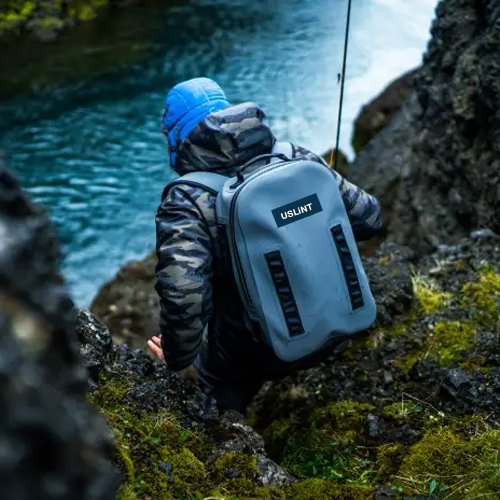
Most waterproof backpacks on the market only offer water-repellent properties, meaning they can only handle light rain and splashes. In heavy rain or when crossing rivers outdoors, they cannot guarantee the dryness of the contents.
Therefore, what you need is not just a water-repellent backpack, but a truly waterproof backpack capable of withstanding heavy rain, kayaking, and water sports. Based on years of practical manufacturing experience and our team’s testing, we have summarized the following practical tips for choosing the best waterproof backpack.
Materials Suitable for Waterproof Backpacks
First, the materials. Based on our project experience, the three most commonly used materials in making waterproof backpacks are TPU-coated nylon, PU-coated nylon, and PVC.
TPU-coated nylon is currently the standard material for waterproof backpacks with the highest waterproof performance on the market, with a hydrostatic pressure resistance of over 3000mm. It is durable, tear-resistant, lightweight, and very soft and elastic, and will not harden or become brittle even in cold weather.
PU-coated nylon is the most common material for waterproof backpacks (but not completely waterproof). Its waterproof and tear-resistant properties are good, effectively balancing performance and cost, making it an ideal choice for most commuter backpacks and casual outdoor backpacks. However, note that the PU coating may gradually wear down with use, leading to a decrease in waterproof performance.
PVC offers excellent waterproof performance, achieving complete impermeability, and is also very durable and affordable, making it a suitable material choice for entry-level waterproof backpacks.
Seam Construction
Many waterproof backpacks leak because they use traditional stitching at the seams. Traditional stitching has tens of thousands of needle holes, and no matter how waterproof the fabric is, water can still penetrate the backpack through these holes. Choosing a waterproof backpack with the following seam construction techniques can prevent leaks:
- Seam Tape: Waterproof tape is applied to the seams for a waterproof seal.
- Welded Seams: Hot-melt bonding eliminates needle holes, achieving complete waterproofing.
Roll-Top vs. Zipper vs. Dry Bag of Waterproof Backpack
Common closure types for waterproof backpacks include zippers, roll-top closures, and dry-bag closures.
Zippers are the most convenient to use, but ordinary zippers can leak under continuous rain. Prioritize waterproof zippers (such as YKK) to prevent rainwater from seeping in through the teeth, achieving effective waterproofing.
Compared to zipper closures, roll-top closures offer superior protection. Folding them 3-5 times and securing them with buckles achieves a good waterproof seal without the problems of zippers rusting or getting stuck. However, they are not as convenient to use as zippers.
Dry bag style provides complete waterproofing. Featuring roll-top closures, fully welded seams, and no external pockets, these designs offer optimal waterproof protection, making them the best choice for kayaking and water sports.
Comfort
The performance of a waterproof backpack should not sacrifice the comfort. Pay close attention to the design of the shoulder straps and back panel, as they significantly impact carrying comfort.
Choose wide shoulder straps over narrow ones. Wide shoulder straps have a larger contact area and won’t dig into your shoulders, especially when carrying heavy loads. The S-curve design reduces friction against the armpits and chest, while padding provides cushioning and shock absorption.
As the weather gets warmer, a breathable back panel significantly improves comfort during extended carrying. Prioritize mesh-suspended back panels; this design keeps the backpack away from the back, enhancing airflow and reducing stuffiness.
Besides design, the backpack’s weight distribution also affects comfort. When packing, heavier items should be placed near the bottom of the back panel to bring the center of gravity closer to the body.
Choose the right capacity
A backpack that’s too small won’t meet your needs, while one that’s too large will inevitably lead to overloading. Choosing the right capacity based on your intended use will prevent problems with insufficient space or excessive weight.
For daily commutes, a 15-25L capacity is suitable, enough for a laptop, charger, folders, lunchbox, and other daily necessities.
A 25-40L waterproof backpack is more suitable for travel or weekend hikes. It can hold 1-2 sets of clothes, food, water, and even camera equipment. When necessary, it can be flexibly converted into a day backpack to handle situations where you need to carry extra clothes during a downpour while commuting.
40L+ Waterproof backpacks can meet the needs of long-distance outdoor adventures or trips. You can pack more luggage and even carry tools needed for expeditions, such as a sleeping mat. However, note that large-capacity backpacks prioritize weight distribution and an ergonomically designed carrying system to avoid discomfort and strain during long journeys.
At USL, using high-quality waterproof materials, employing welded/sealed seams, focusing on carrying comfort, and offering multiple capacity options are key steps in creating high-quality waterproof backpacks. Carefully crafted backpacks guarantee performance and quality, and enhance the user experience.
Straits Research predicts that the global backpack market will reach a value of 29.73 billion yuan by 2033, with waterproof and weatherproof backpacks being the fastest-growing market category. This indicates that creating unique and high-quality waterproof backpacks will effectively enhance your brand awareness and market share in the future.
If you are looking for a high-quality, customizable waterproof backpack manufacturer or a customized solution, USL‘s sales team is ready to provide you with exclusive customization services and pricing support.