
Procurement managers sourcing custom outdoor toiletry bags often face the same dilemma: should the material be TPU or PVC? The choice can actually be quite simple. If the bag needs to be soft, cold-resistant, and have a leather-like feel, go with TPU. If you prioritize high initial transparency and controllable cost, go with PVC. But note: PVC’s transparency is time-limited—it yellows with use, while TPU holds its clarity far longer.
Many buyers focus only on the lowest unit price and overlook the total value and intended use of TPU versus PVC outdoor toiletry bags. That can waste marketing spend and derail sales plans.
Why TPU or PVC for outdoor toiletry bags?
TPU and PVC are the go-to materials for outdoor toiletry bags because waterproof, wipe-clean bags suit outdoor conditions better, and these two materials are the most mainstream, cost-effective options for transparent or semi-transparent waterproof toiletry bags.
Canvas, nylon, and other fabric materials feel nice, but their surfaces are porous. If toiletries leak or the bag gets wet, liquids seep in, leave stains, and can even breed bacteria and cause odors. They are not suitable as the main material for the inside or outside of an outdoor toiletry bag.
Outdoor toiletry bags vs. everyday makeup toiletry bags
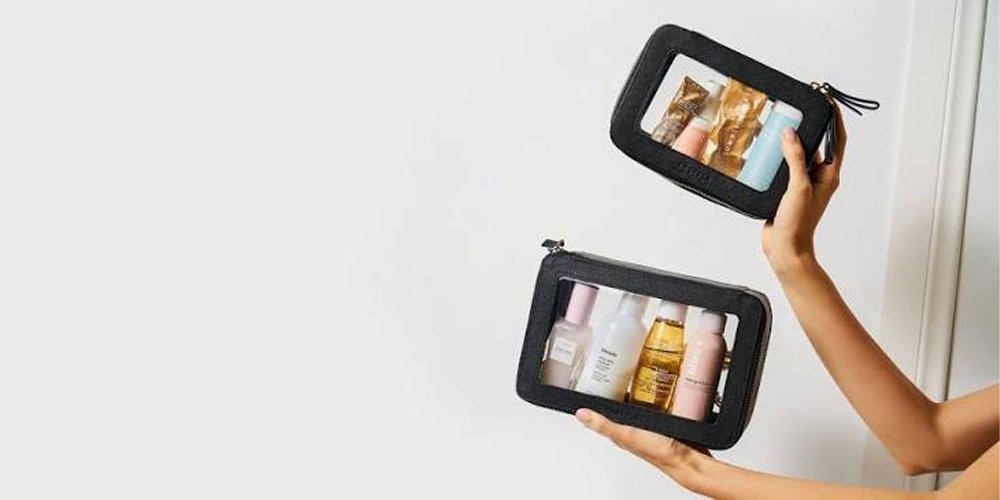
We don’t recommend using an everyday makeup oiletry bag in place of an outdoor toiletry bag for camping, multi-day hiking, mountaineering, or similar activities. Both can hold toiletries and skincare essentials, but their performance differs significantly.
- Outdoor toiletry bags need to be abrasion-resistant, waterproof and leak-proof, and foldable. Everyday makeup toiletry bags need to look stylish and have well-planned compartments.
- Outdoor toiletry bags mostly use waterproof, easy-clean materials such as TPU and PVC. Everyday makeup toiletry bags use a much wider range of materials, including canvas, cotton, polyester, oxford, and EVA.
- Outdoor toiletry bags prioritize waterproof zippers and roll-top seals, and often feature hanging loops or clips so they can be hung directly on a tent pole or backpack. Everyday makeup toiletry bags focus more on multiple compartments to keep cosmetics and skincare items organized.
| Dimension | Outdoor toiletry bag | Everyday makeup/toiletry bag |
| Core requirements | Waterproof, temperature-resistant, fold-resistant, odor-free, lightweight | Good looks, capacity, compartments, hand feel, easy opening |
| Main materials | TPU / PVC / waterproof-coated nylon | Canvas, cotton, polyester, PU, EVA, nylon + lining |
| Structural focus | Sealing, hanging loops/clips, flat folding | Multiple compartments, structured shape, wide opening, removable inner pouch |
| Printing options | Screen printing / heat transfer / labels | Screen printing, heat transfer, embroidery all viable |
Choosing TPU or PVC for outdoor toiletry bags?
TPU and PVC differ mainly in five areas: hand feel, low-temperature resistance, odor, printability, and cost.
Appearance and hand feel
TPU is thermoplastic polyurethane. It is elastic, snaps back quickly, and is very soft. Its surface feels closer to rubber—dry and not sticky. It resists permanent creasing after repeated folding, which means a TPU outdoor toiletry bag can be folded and stuffed into a backpack again and again while keeping its shape over time.
PVC is polyvinyl chloride. Its hardness is adjusted with plasticizers. More plasticizer makes it softer; less makes it stiffer. Over time, however, the plasticizer migrates, and the material becomes harder and tackier.
Low-temperature resistance
TPU stays elastic at minus 35°C, which means an outdoor toiletry bag can be used in low-temperature settings such as snow-mountain climbing and skiing. It is a better fit for Nordic brands and retailers developing TPU toiletry bag lines.
PVC is weaker on low-temperature resistance. It can start to harden and become brittle at around 5°C, and folds can crack. It is better suited to warmer regions.
Odor and safety
TPU is virtually odorless. PVC contains plasticizers and has a plastic smell, which becomes more noticeable when the bag is stuffed in a backpack and warms up. Toiletry bags are usually stored with toothbrushes, towels, and other personal-care items, and a strong plastic smell can easily trigger complaints or even returns.
If you care deeply about customer safety and environmental credentials, we recommend custom TPU outdoor toiletry bags.
Printability
Transparent TPU and PVC toiletry bags both give brands space to display logos, graphics, and product information, but the two materials differ in printing compatibility.
Common logo printing options for custom bags include screen printing, UV printing, heat transfer, full-color printing, and all-over printing. PVC softens at 60–80°C, so it is not suitable for heat transfer, which typically runs at 120–180°C; PVC can blister and deform. Screen printing and UV printing are safer options.
TPU offers broader printing options, including heat transfer, screen printing, and UV printing. Screen printing with TPU-specific inks produces high-adhesion, abrasion-resistant, flex-resistant graphics. UV printing delivers vivid colors. Heat transfer bonds well on TPU, but toiletry bags are opened, squeezed, and folded frequently. If the graphic lands on a zipper fold or a corner of the bag, repeated stress can cause edge lifting or peeling, and the edge’s water resistance after contact with water and skincare products also needs verification. Heat transfer graphics should therefore avoid high-flex zones, and before mass production you should ask the factory to run a combined water-soak and flex test.
When you receive actual samples, fold the printed toiletry bag repeatedly, rub it, clean it, and open and close it to verify the print results. For B2B projects, it is critical to produce a toiletry bag that is durable and keeps its logo looking good throughout its service life.
Cost
TPU costs more than PVC fabric, which raises the overall cost of a custom toiletry bag. In production, TPU also has a narrower welding window and demands more from equipment and operator experience. If a factory lacks experience, defects and rework are likely, wasting material and driving up cost.
PVC is usually high-frequency welded, a process with a wider operating window and a higher yield rate than TPU. But PVC toiletry bags can suffer from low-temperature cracking, odor, and yellowing, which lead to returns and lost customers. Those losses should also be factored into the cost.
USL has over 20 years of experience in custom TPU bags. We have developed a range of products including TPU toiletry bags, TPU makeup bags, TPU tote bags, and TPU backpacks, all well received in European and American markets.
TPU outdoor toiletry bags are better suited to genuinely cold conditions, outdoor use, business travel, and travel scenarios. PVC toiletry bags are better suited to hotels, B&Bs, and e-commerce scenarios that need a transparent look at a controlled cost. If your outdoor toiletry bag is a high-volume, low-price line for mild end-use conditions (suburban camping, basic wet/dry separation), PVC still has room on price—but you need to accept compromises in low-temperature flexibility and odor. For genuinely cold outdoor use or brand-positioned lines, prioritize TPU.
Do TPU and PVC toiletry bags show dirt?
Beyond material choice, there is another practical question buyers often ask about transparent bags: do they show dirt? Yes. Both TPU and PVC toiletry bags are transparent, so toothpaste stains, hand cream, and makeup items inside are clearly visible. That is the downside of transparent materials. To address this, USL offers three practical options:
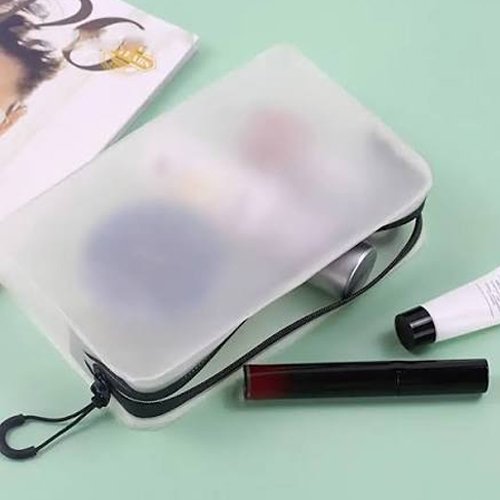
- Use a semi-transparent frosted finish, which makes interior details less visible and looks cleaner.
- Use a double-layer construction with a dark inner layer and a transparent outer layer, which also reduces the visibility of dirt.
- Pair the bag with a removable inner pouch that can be taken out and washed separately.
If you need any of these, decide at the design stage. Changing them later at the sampling stage means reselecting materials and molds, which increases cost and affects lead time.
What to confirm before requesting a quote for custom outdoor toiletry bags?
Preparing a basic product checklist helps the factory provide a more detailed and accurate quote. Use the following list:
- How much will the outdoor toiletry bag hold? This determines size and capacity.
- What is the intended service life—single-use or repeated use over years?
- What is the structure—a regular rectangular shape, a flat shape, or a design with side gussets?
- Does the bag need to be fully transparent or frosted semi-transparent?
- Will customers fold the outdoor toiletry bag?
- What material thickness is required? This affects appearance and hand feel.
- Will a logo or graphic be added to the bag?
- What closure type—zipper, snap button, or roll-top?
- Are pockets, D-rings, handles, straps, or reinforcement needed?
- What order quantity—500 pieces or 1,000?
- What finished unit price is acceptable?
Choosing TPU or PVC ultimately depends on product development, not just the material itself. TPU outdoor toiletry bags emphasize durability and flexibility. PVC outdoor toiletry bags balance initial transparency, structural strength, and affordable pricing.
If you are unsure whether to choose TPU or PVC for your custom outdoor toiletry bag, send us product photos, reference images, sketches, or existing samples. We will recommend the right custom solution based on our project experience.